Farmland Value Trends: Illinois, Minnesota and Wisconsin
As of midyear 2026, farmland values across Compeer Financial's Upper Midwest territory have held firm despite weak farm incomes. Lower crop margins, elevated financing costs and uneven sales activity have made buyers more cautious. However, limited land availability and steady demand for productive, well-located farms continue to support land values.
The Upper Midwest farmland market is best viewed as durable, not uniform. Specific land features are playing a greater influence on values, such as soil quality, drainage, location and ease of operation. Neighboring operators, livestock or dairy influence and the amount of competing land on the market can also influence land sales. When these factors align, buyers are willing to compete. Otherwise, buyers show greater pricing discipline.
Benchmark trends can be useful for measuring market direction, but they do not capture every local market nuance. In the following, we'll examine trends across Illinois, Minnesota and Wisconsin using benchmark data, auction results, private treaty activity and appraiser observations. Whether you're buying, selling or holding land, these insights can provide some guidance in your decisions.
For expert updates and in-depth analysis throughout the year, subscribe to Compeer’s monthly appraisal e-newsletter and the Appraisal Report podcast.
Illinois farmland values in 2026
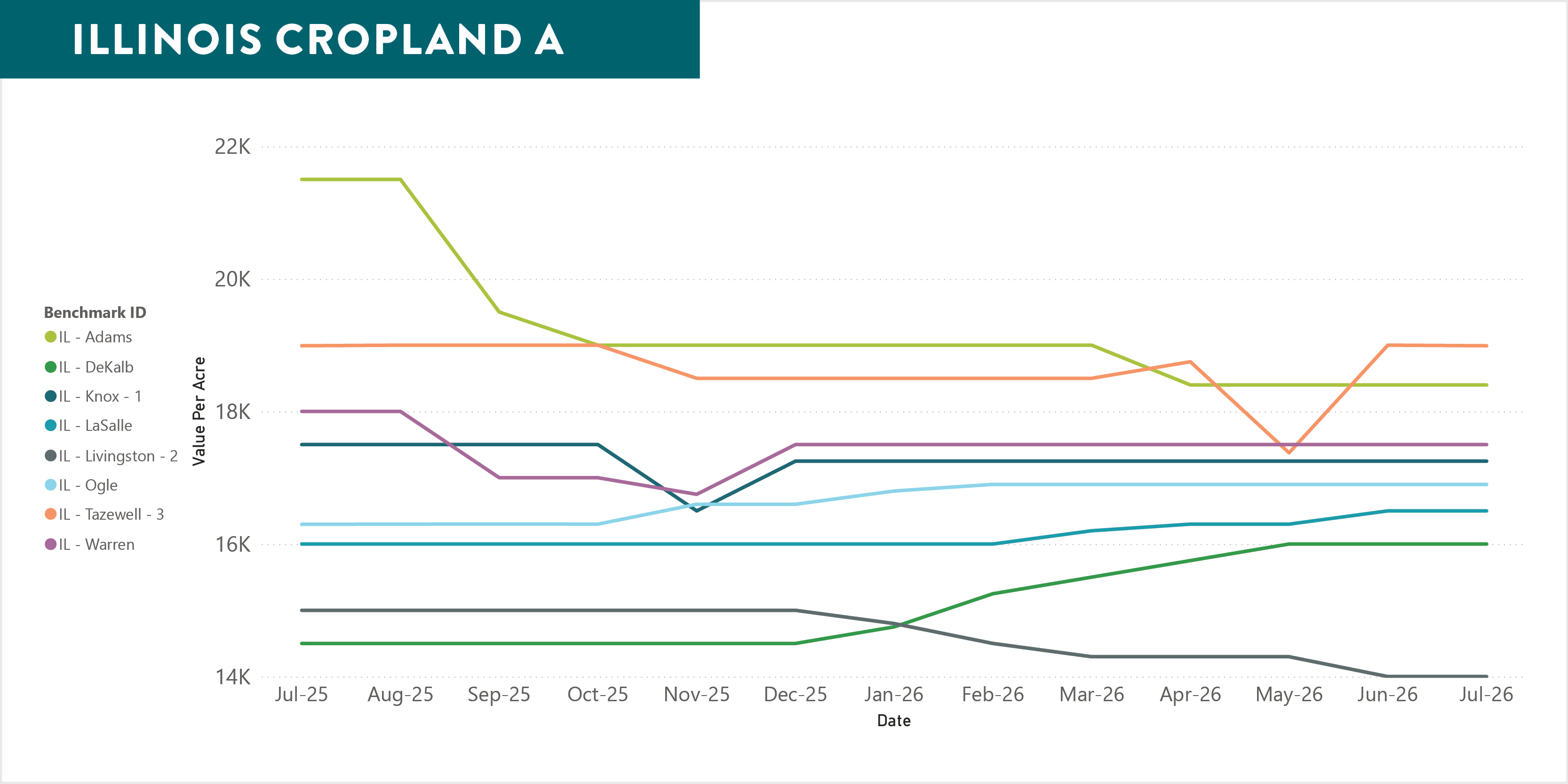
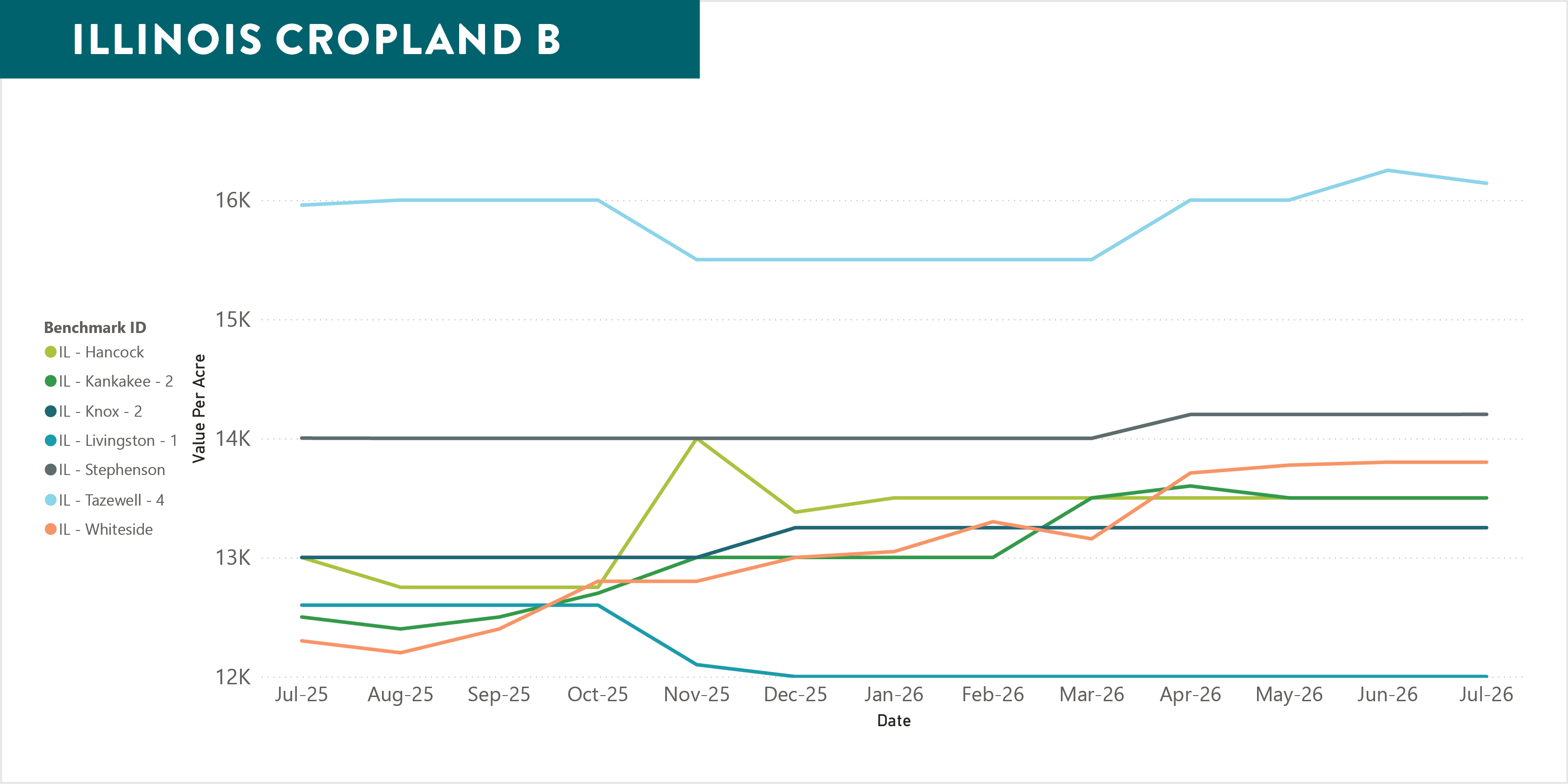
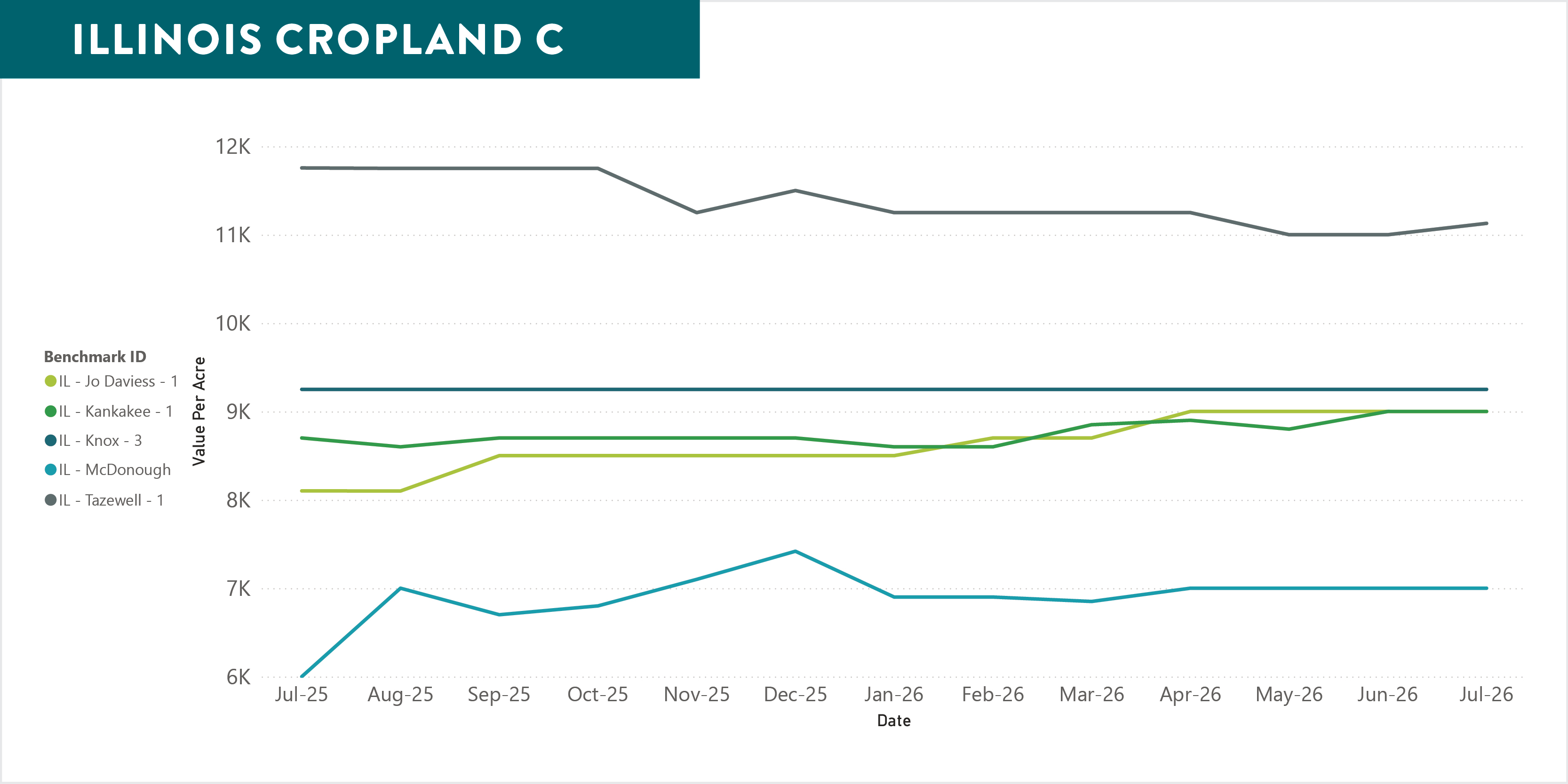
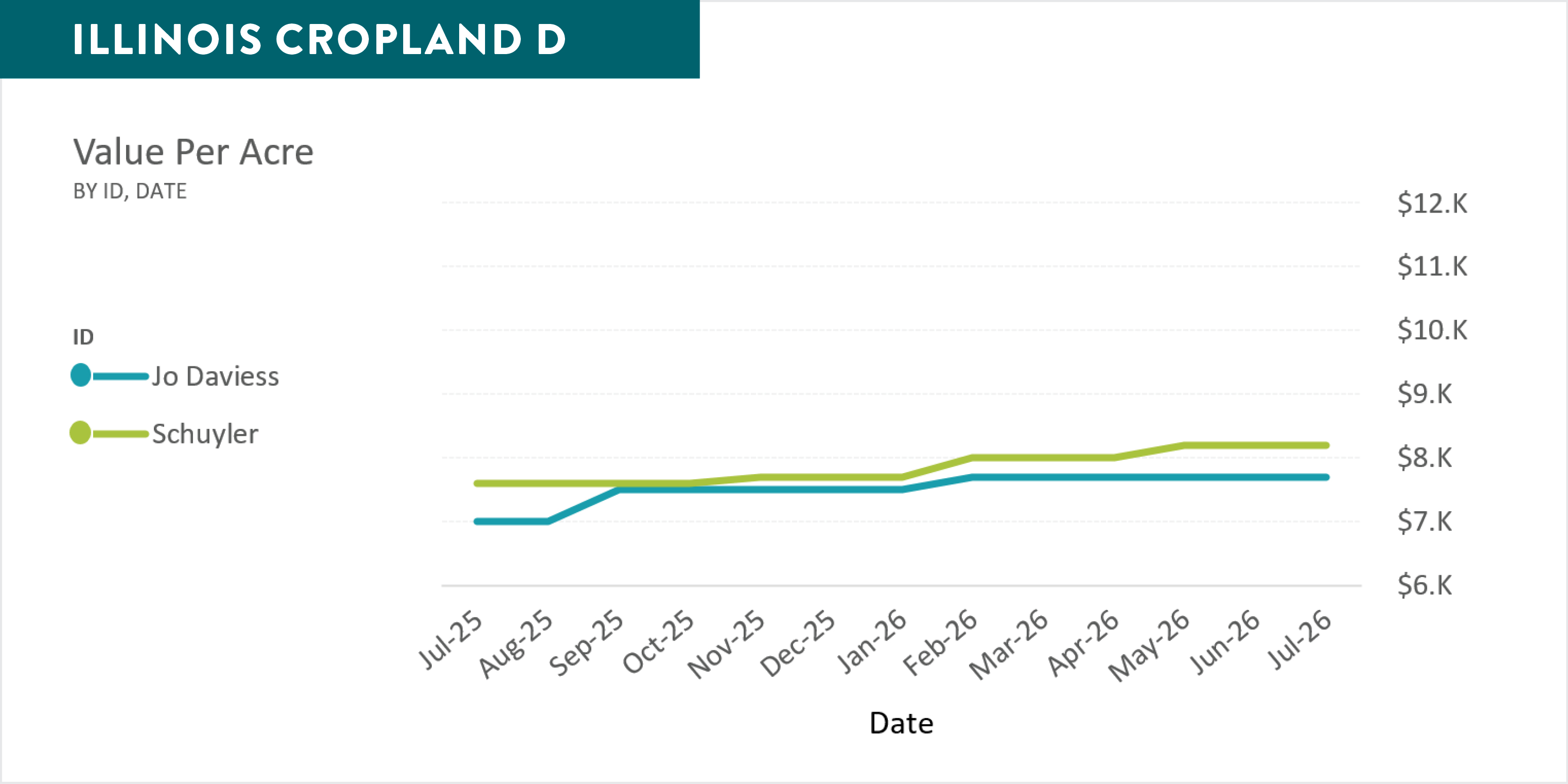
At midyear 2026, the Illinois farmland market is steady but increasingly cautious. After several years of rapid appreciation, farmland values have generally leveled off. However, some areas have held firm despite lower farm incomes.
Reduced farm profitability continues to exert pressure on land markets. Lower commodity prices, elevated input costs and higher interest expenses have tightened margins for many Illinois grain producers. These conditions have made buyers more selective.
Even so, farmland remains a tightly held asset in Illinois. Limited supply continues to support values, with farm operators and investors driving demand.
Local farmers are still the primary buyers in many transactions. Producers are willing to pay premium pricing for adjoining or strategically located farmland. Still, they're evaluating prices more carefully compared to the strongest years of the market.
Because Illinois features several distinct farmland market areas, statewide averages do not tell the full story. Soil productivity, drainage, tract size, field configuration, local competition, livestock influence, recreational demand and development pressure can all affect value. High-quality tillable land in strong farming areas continues to attract interest. Secondary-quality farms or properties with operational limitations may see more price resistance.
Transaction volume has remained lower than during the most active years following 2020. Public auctions are still an important indicator of market direction, especially during the late-year selling season. Private treaty sales are a preferred option for buyers and sellers seeking more flexibility in negotiating price and terms. Fall and year-end auctions will provide key benchmarks for the direction of the 2026 and early 2027 farmland market.
Overall, the Illinois farmland market remains resilient. Buyers are more disciplined, sellers are watching local auction results closely, and profitability concerns are creating some hesitation. However, land values across the state continue to be supported by limited supply, long-term confidence in farmland ownership and steady interest from both farmers and investors.
Keep up with the latest Illinois farmland insights.
Minnesota farmland values in 2026
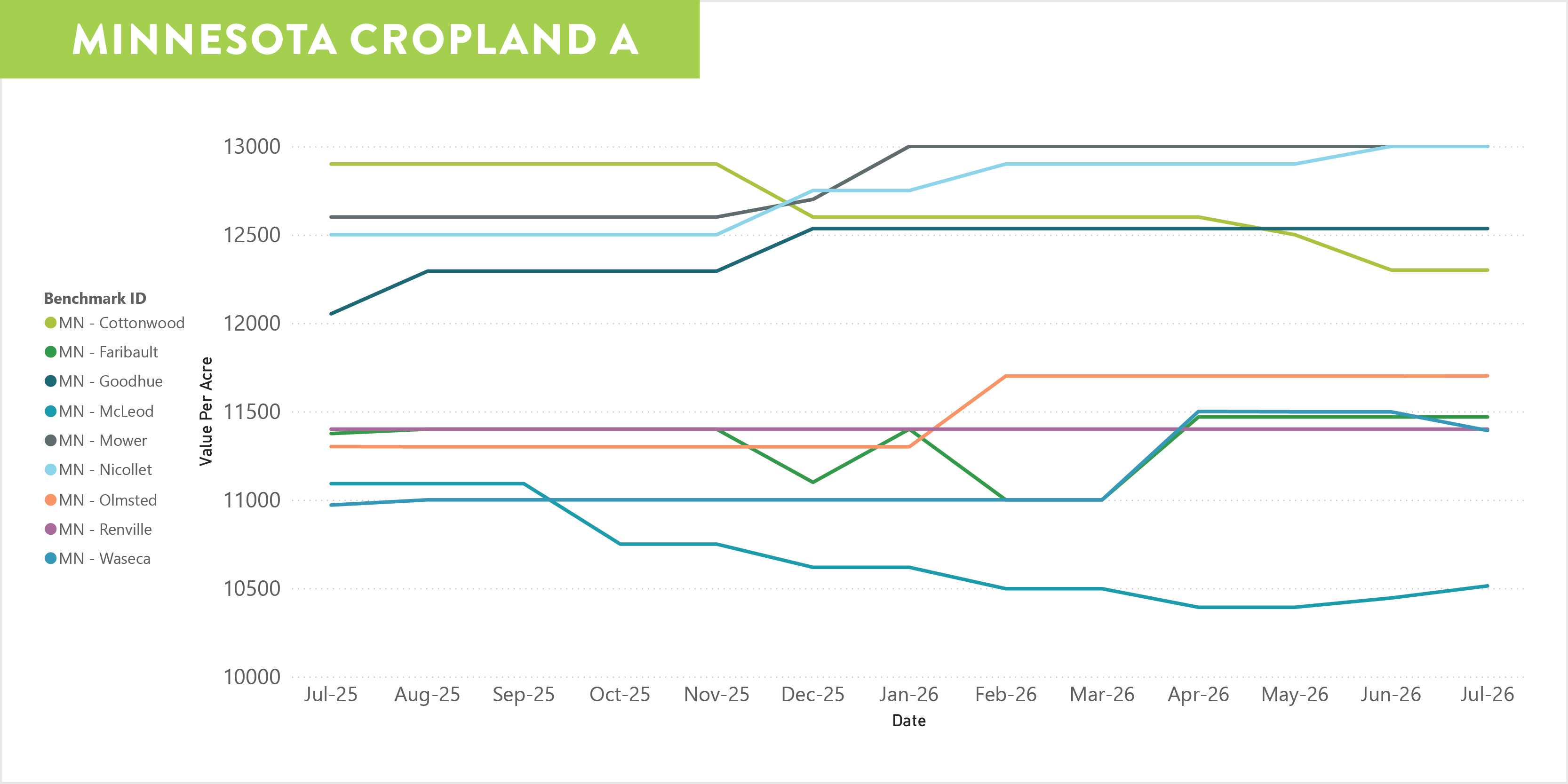
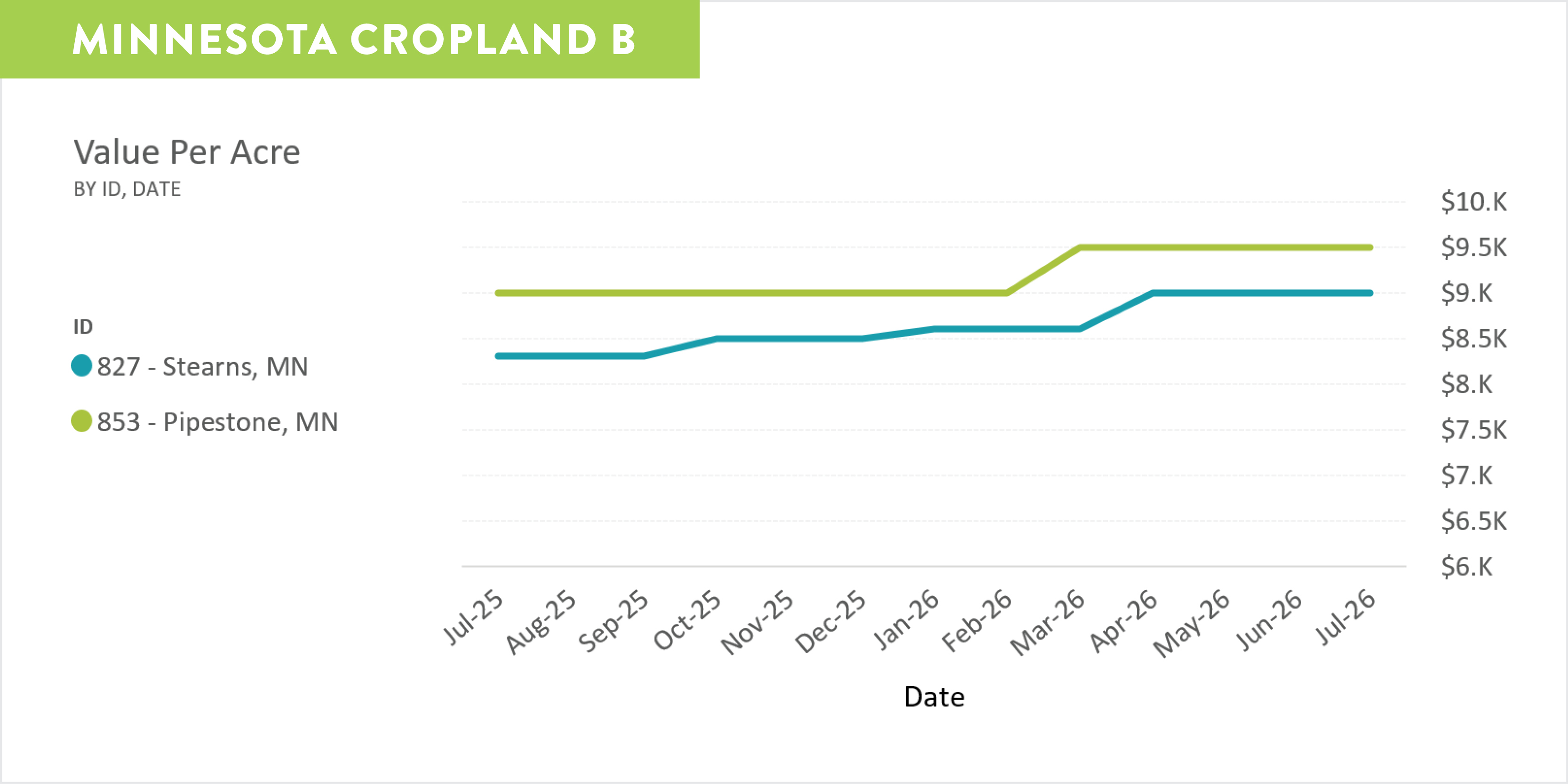
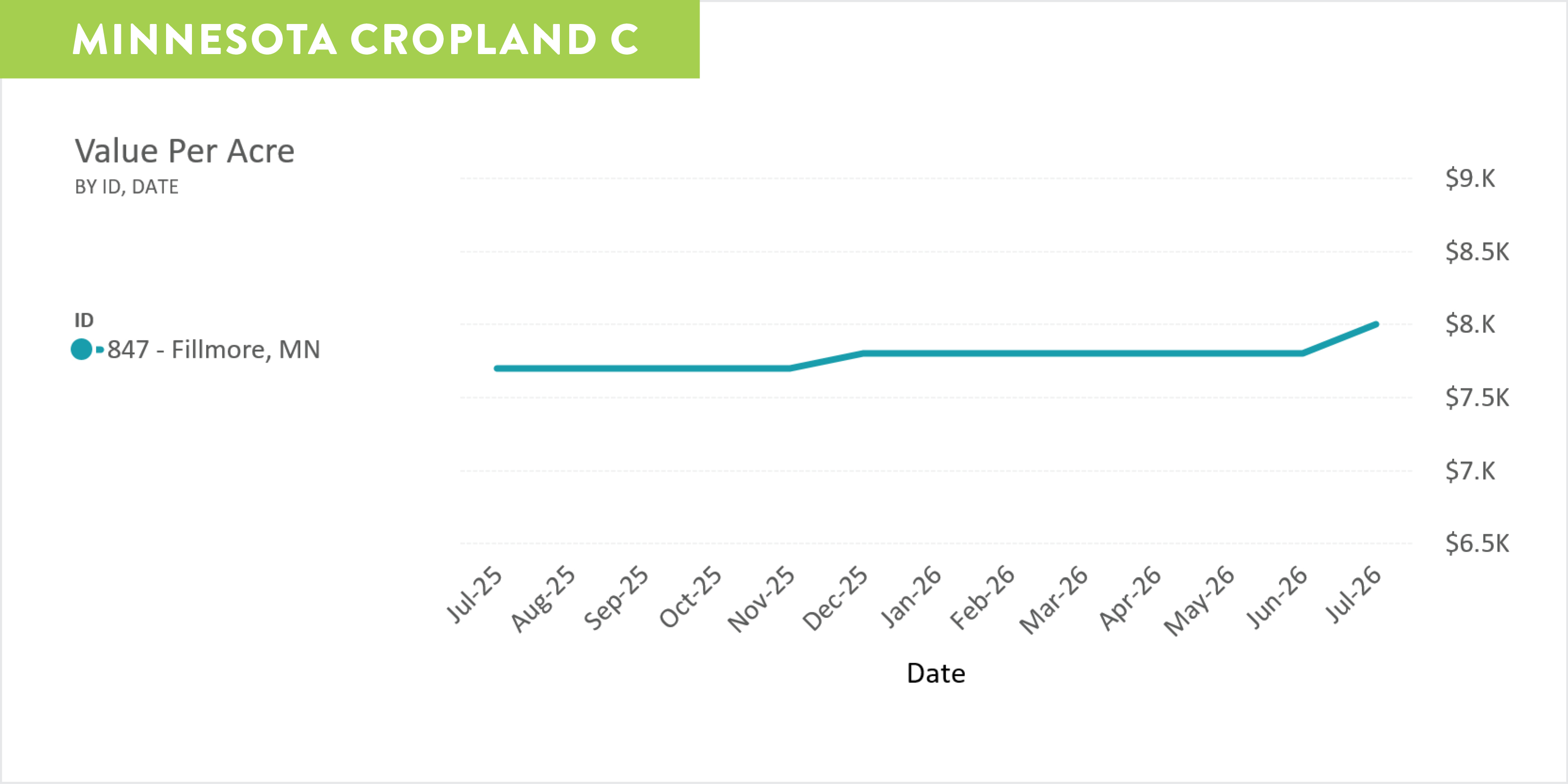
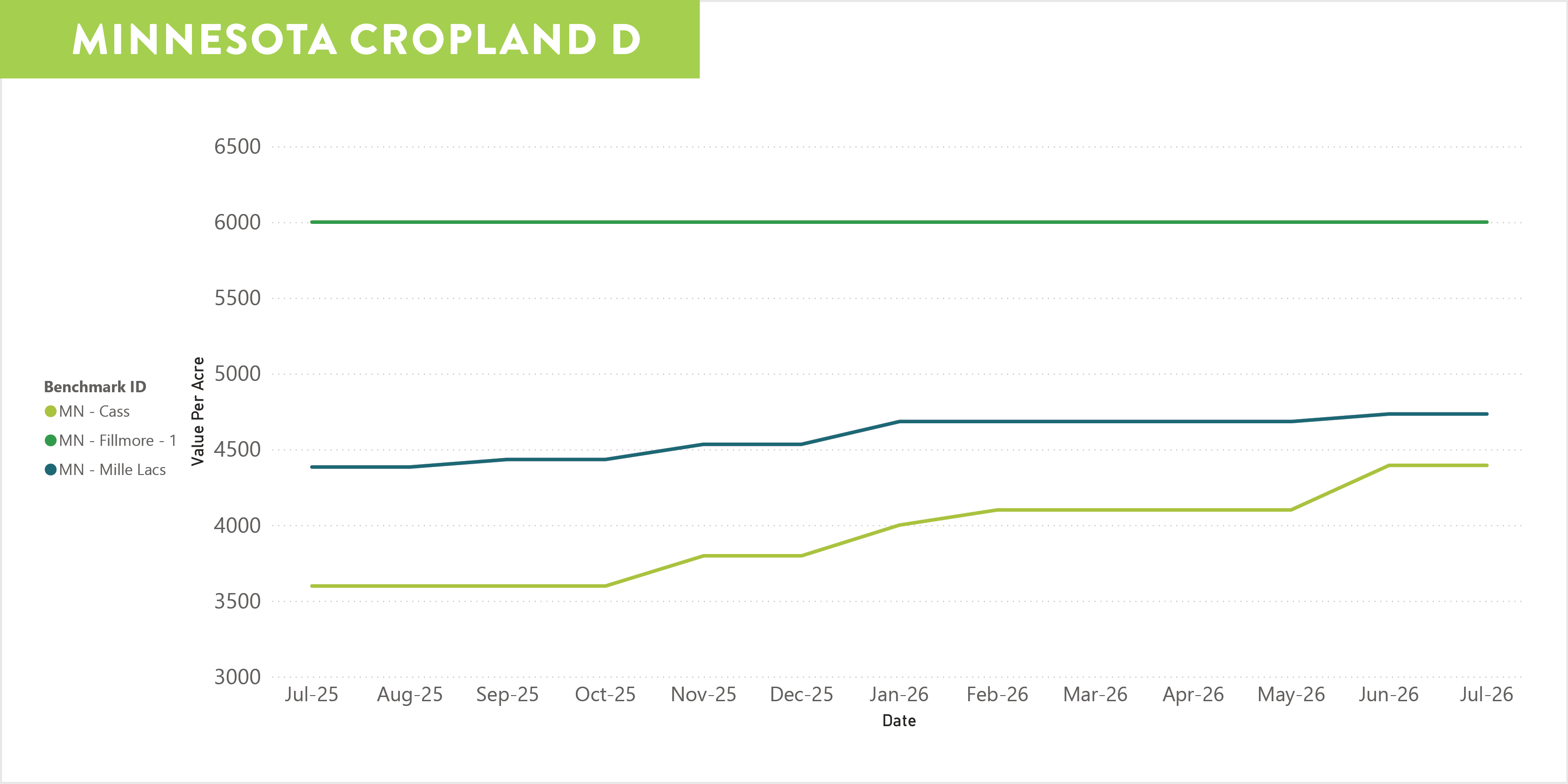
Minnesota farmland sales in the first half of 2026 are showing a similar pattern as the first half of 2025. Though they haven't yet reached the peak ranges, farmers and investors still pay competitive prices for land with high soil productivity and good drainage.
In south-central Minnesota, high-quality land sells for $11,500 to $13,500 per crop acre. Stronger markets, such as Nicollet County, have even seen a few sales in the $14,000 to $15,000 per crop acre range.
The market still holds in a typical supply-and-demand structure. Areas with lower sales volume generally show stronger prices compared to those with high sales volume.
Because sales are typically slower from March to August, the best indicator of the 2026 land market will come from auction activity from September through December.
Stay up to date with Minnesota farmland trends.
Wisconsin farmland values in 2026
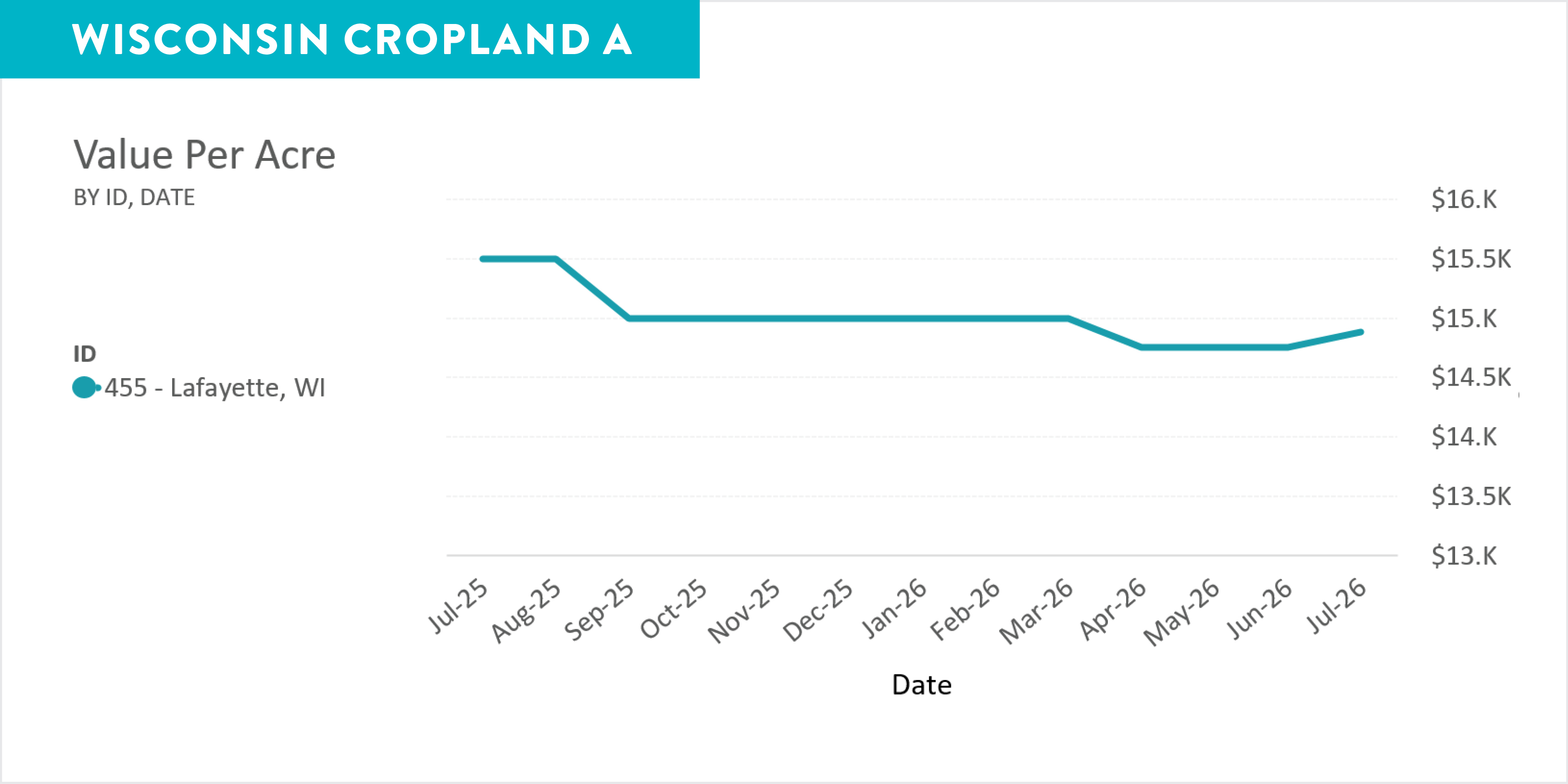
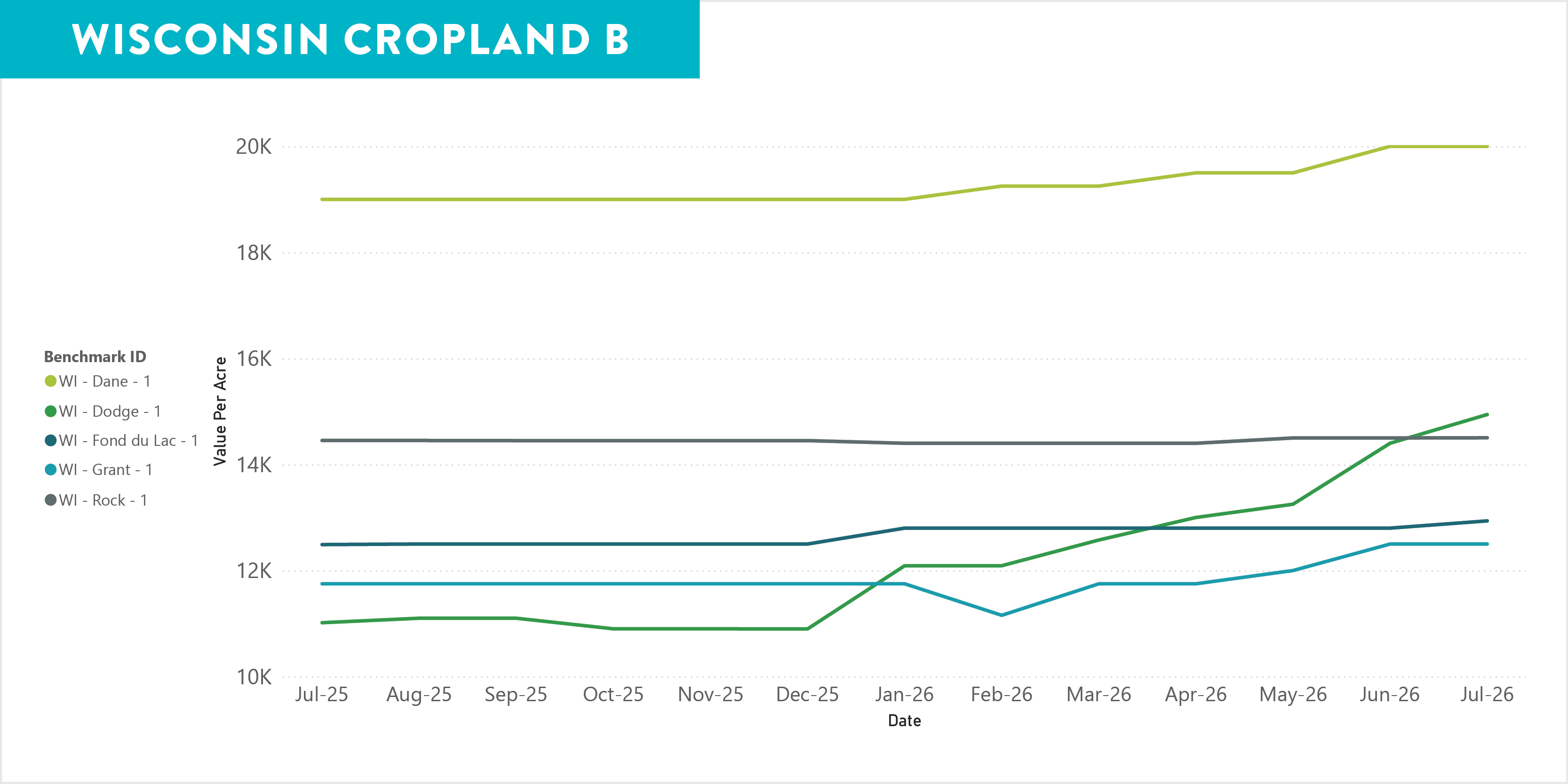
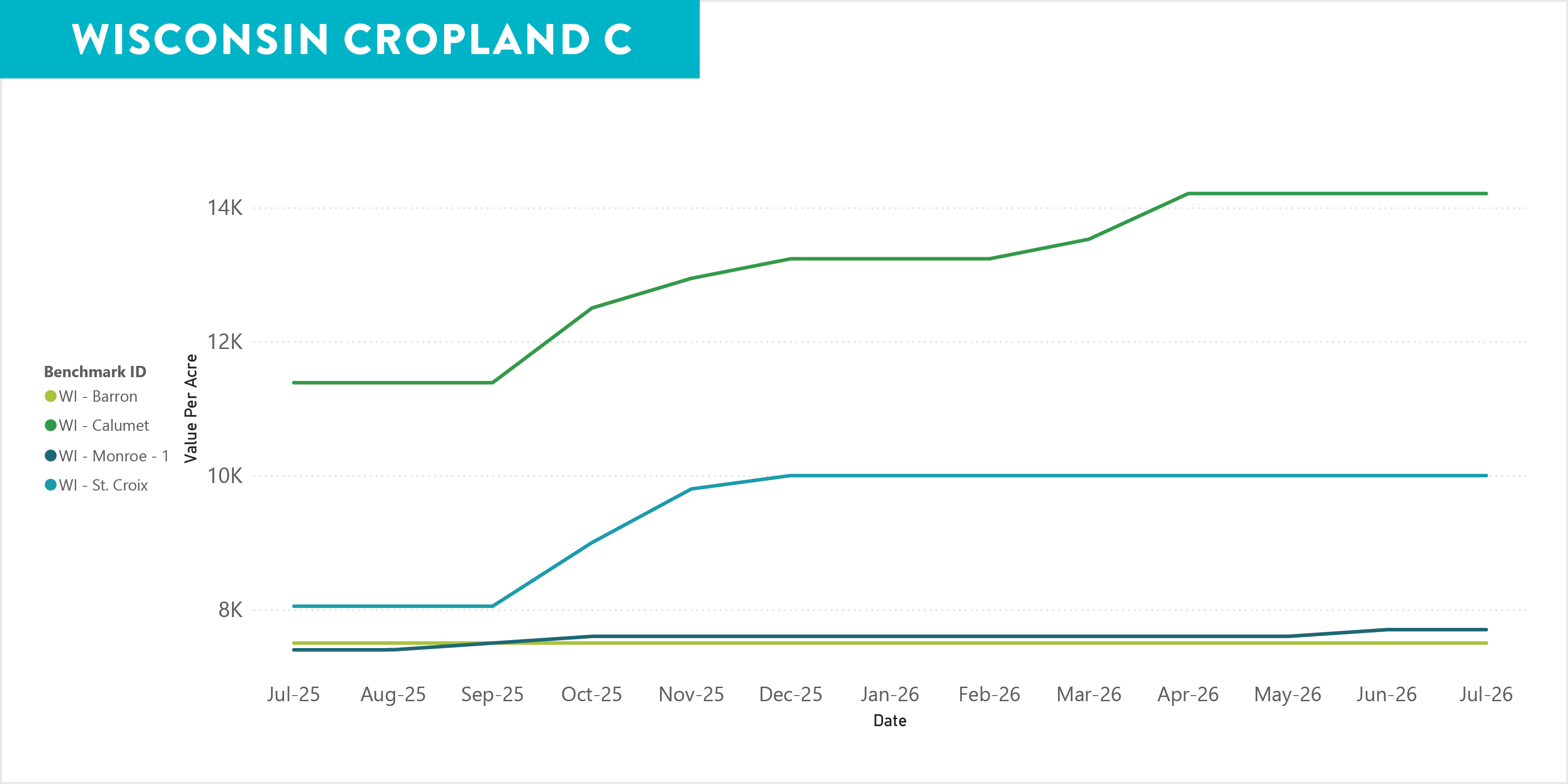
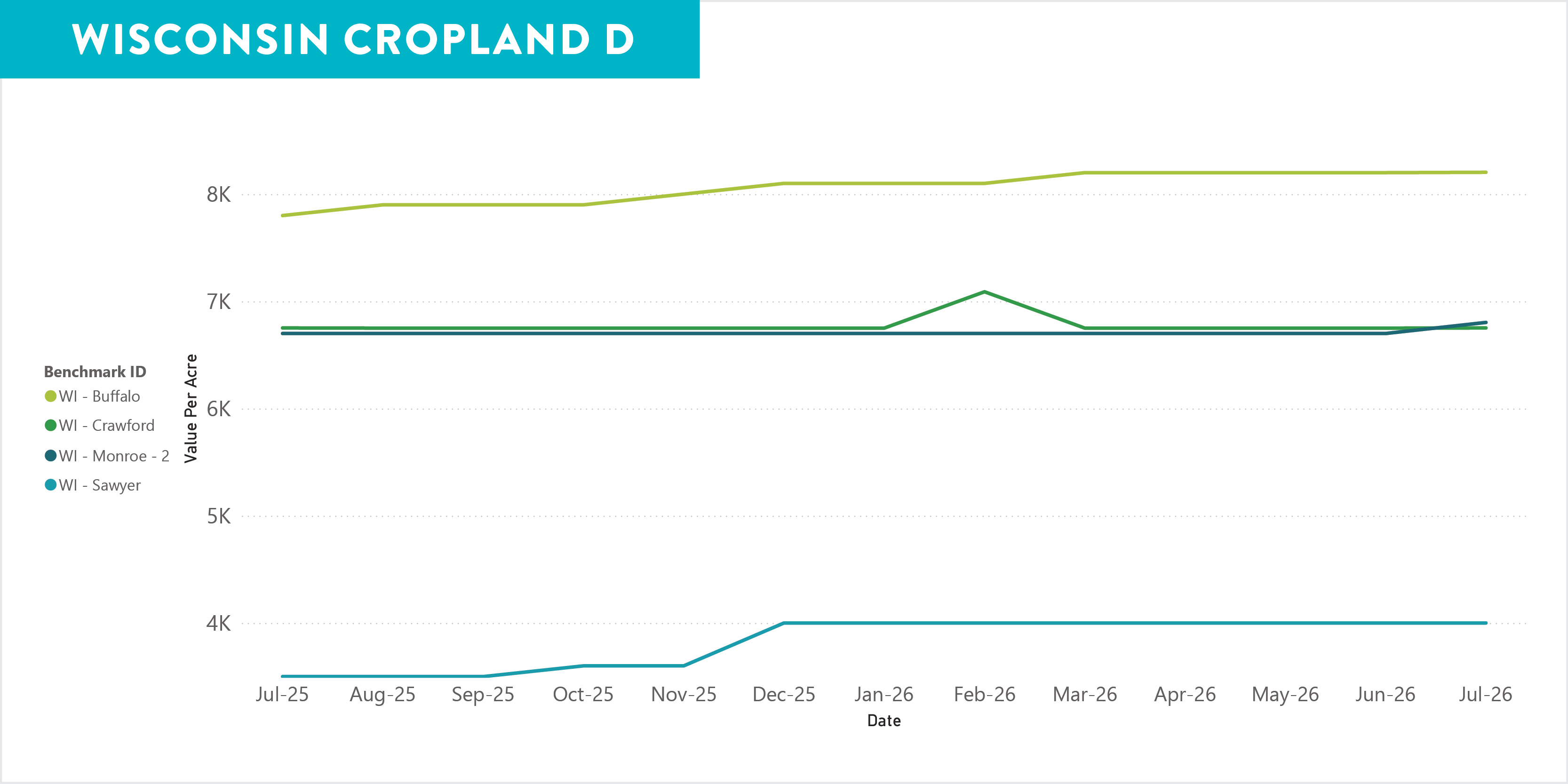
The farmland market in Wisconsin finished strong in 2025, despite tight profit margins for corn and soybean production and declining milk prices. Benchmark data tracked across the state by Compeer Financial appraisers showed year-over-year value increases of up to 25.9%. Across the 10 benchmark locations, the average increase from December 2024 to December 2025 was approximately 10.8%.
Strong land values have remained stable throughout Wisconsin in the first half of 2026, with some areas, particularly eastern Wisconsin, continuing to see substantial increases. These gains have been supported by the same market factors that drove values higher in 2025, including limited availability and strong demand from dairy operations. The 10 benchmark locations throughout the state showed an average increase of 4.5% from January 2026 through June 2026.
Limited inventory continues to support competitive bidding when parcels become available, sustaining upward pressure on values. The dairy industry remains a key driver across much of the state, with some of the highest land values found near dairy operations where competition for land is strongest. Proximity to these operations reduces costs associated with manure application and feed handling, improving operational efficiency.
Overall, constrained land supply and location-specific demand, particularly in dairy-intensive regions, have helped sustain Wisconsin farmland market values despite broader economic challenges. As 2026 has progressed, these same dynamics have continued to support stable to increasing land values, especially where dairy-related demand remains strong.
Through the year, find the latest insights on Wisconsin farmland.
2026 Midwest Farmland Values at a Glance: Buyers Remain Cautious but Strategic
Across Illinois, Minnesota and Wisconsin, properties with the strongest features helped keep farmland values steady through the first half of 2026.
The broad correction that some may have anticipated has not developed. Limited sale inventory, long-term confidence in farmland ownership and strategic demand from operators and investors continue to set a baseline for values.
That support is strongest where a property improves an operation's long-term position: productive soils, adequate drainage, efficient field shape, strong access, proximity to existing acres or a fit with manure management and feed needs. Those characteristics matter more in a tighter margin environment because buyers are testing both the purchase price and the practical return from owning the asset.
Secondary land is more exposed to cautious buyer behavior. Properties with lower productivity, drainage issues, awkward configurations, smaller buyer pools or elevated seller expectations may need more time or sharper pricing to clear the market.
The fall auction season will be an important indicator on how much buyer appetite remains for farmland for sale after a first half defined by tighter margins and elevated borrowing costs.
Economic Update: Higher Inflation Keeps Pressure on Interest Rates
For Upper Midwestern row crop producers, margins remain tight with volatile commodity prices, elevated input costs and higher borrowing costs. Ad hoc government payments added notable cash flow over the winter and spring. Profitability in the second half of 2026 will depend heavily on yield, harvest prices and cost control.
The interest rate outlook has shifted since the start of the year when up to two rate cuts (-0.50%) were expected in 2026. Inflation remains well above the Federal Reserve's 2% goal, with May personal consumption expenditures (PCE) inflation at 4.1% and May consumer price index (CPI) inflation at 4.2% year over year.
In June, the Federal Reserve left its target range unchanged at 3.50% to 3.75%. Market interest rates have generally followed the same higher-for-longer trend, keeping borrowing costs elevated for farmland buyers seeking financing.
A tentative U.S.-Iran agreement to reopen the Strait of Hormuz could ease energy and fertilizer price pressure if implemented, but timing and shipping normalization remain uncertain.
So far, these pressures have not translated into broad weakness in the farmland market. Limited land availability, investor demand and continued competition for high-quality ground continue to support values. However, higher borrowing costs and competing returns on other investments, such as the stock market, may factor in some buyers' decision-making. In short, farmland values remain supported but are not immune to broader economic conditions.
What’s Next for Upper Midwest Farmland Values?
Looking ahead to the second half of 2026, the central question is whether limited supply continues to offset tight farm economics. A light fall auction season would likely keep quality farms well supported. A heavier listing period, especially in areas with thinner local buyer pools, could make quality, location and operating fit even more visible in sale results.
For landowners, lenders, operators and investors, benchmark values should be treated as a starting point rather than a substitute for parcel-level analysis. Compeer's appraisal team will continue to pair benchmark monitoring with local sales analysis and field-level appraiser insight so clients can understand not just the current value, but the strength of the demand behind it.
Commentary and expertise provided by Compeer Financials’ Brent Wiest, appraisal manager in Illinois, Jeff Jens, certified appraiser in Wisconsin, Jeremy Fluegge, certified appraiser in Minnesota, Deanne Phelps, certified appraiser in Illinois and Megan Roberts, ag economist and author of Compeer’s Economic Minute.